The Platform
An operating system built for unattended hardware
HurricaneOS eliminates the complexity between your code and your edge fleet. Push containers, not kernel patches.
The Platform
-
01 · Survival
Built so an unclean shutdown has nothing to corrupt
The system volume is mounted read-only, so an unclean shutdown has nothing to damage. Updates write to the idle bank and switch only after a health probe passes; if it fails, the bootloader returns to the bank that was working. No operator, no site visit.
-
02 · Security
Hardware-backed identity, locked down by default
Every device holds its own identity key in a TPM 2.0 — which we require to certify any hardware profile — and the identity is designed so it cannot be copied to another device. Device and cloud authenticate each other with mutual TLS, the firewall denies by default, applications run isolated in containers, and communication ports and other I/O interfaces stay closed until they are explicitly approved. These are table stakes for edge Linux and we treat them that way; where they matter is that they map directly onto RED Article 3.3 and the Cyber Resilience Act essential requirements, set out on the compliance page.
-
03 · Operated
We run the platform. You write the application.
OS patching, rollout scheduling, health monitoring and failure response are ours, not a console we hand you. Your team pushes code to a repository, every build is CVE-scanned and stored in your own private registry — never public — and it reaches the fleet. Most comparable platforms maintain their OS but leave you to operate it — which means hiring someone who knows embedded Linux, or discovering you needed one.
-
04 · Sovereignty
An EU vendor, for buyers who have to care
The OS, the control plane and the engineering are ours — built and operated from Poland, hosted within the EEA. For defence, critical infrastructure and NIS2-scoped operators, the jurisdiction of the vendor maintaining your boot chain is a procurement question — and every comparable platform we evaluated answers it from outside the EU. EU rules have teeth now: cybersecurity has been mandatory for new wireless connected products since August 2025, and Cyber Resilience Act reporting since September 2026.
Separately: for teams who need more than running their own code at the edge, we also take on data collection and processing engagements. That is a distinct offering, contracted on its own — it is not part of the OS subscription.
Get Started
See HurricaneOS in action
Book a 30-minute demo, or ask about a trial on a board we certify or a leased unit. No commitment to talk.
01 / Boot
Watch it boot.
The console output of a complete HurricaneOS start-up, from the bootloader to the login prompt. Unedited, 14 seconds.
- Two OS slots.
- The bootloader chooses between Root A and Root B. A new operating system is written to the standby slot; if it fails to boot, the device falls back to the previous one automatically.
- Identity in hardware.
- At first boot the device generates its private key inside the TPM 2.0. The key never leaves the chip, so the device cannot be cloned.
- Locked down by default.
- Deny-by-default firewall, isolated containers, and serial/COM and other I/O interfaces disabled until a capability is granted.
02 / On the device
What's on the device
Four partitions, one of them writable. The system volume is mounted read-only, so a power cut during a write is not a failure mode — there is nothing to corrupt.
Edge device
- Isolated containers
- Deny-by-default firewall
- I/O disabled by default
- Hardware via capability broker
Disk · eMMC or NVMe/SSD · ≥ 16 GB
Data — expands to fill the disk on first boot
Drawn from the HurricaneOS user manual.
- Why two banks.
- An update never touches the running system. It is written to the idle bank, verified, then booted. If the health probe fails, the bootloader falls back to the bank that was working.
- Why read-only.
- Field failures in unattended hardware are dominated by filesystem corruption after unclean shutdowns. Removing write access to the system volume removes the class of failure.
- Why keys in hardware.
- The device generates its identity key inside the TPM 2.0 chip and the key never leaves it, so the identity is designed not to be copied to another device.
03 / OS updates
An OS update that falls back instead of bricking
Operating-system updates are delivered over the air by Global Storm only. Application data is never touched.
- 1 OTA image arrives
- 2 Written to the standby slot
- 3 Bootloader switches slot
- Boots?
- yes Runs the new OS
- no Falls back to the previous slot — automatically
Data partition: never touched by an OS update
Drawn from the HurricaneOS user manual.
04 / Delivery
From git push to a running container
You never SSH into a device to deploy. A new build never ships by itself — you choose which build goes live.
- Your team: 01 · git push Push to the connected branch
- Global Storm cloud: 02 · build Multi-arch image
- Global Storm cloud: 03 · registry Private registry
- Global Storm cloud: 04 · scan CVE scan
- Your team: 05 · deploy Pick a succeeded build → Deploy manual gate
- Your fleet: 06 · pull Each device pulls its CPU variant mutual TLS
- Your fleet: 07 · run Isolated container
health · logs · status → dashboard
Drawn from the HurricaneOS user manual.
05 / Control plane
Every device, every version, one view
Fleet state is authoritative in the cloud and reconciled by the device. See every device's health, OS version and running containers, deploy a chosen build to one device or the whole fleet in a single action, and redeploy a known-good build to roll back — without sending anyone to site.
- On target version
- 1276
- Staging
- 6
- Rolled back
- 2
- Unreachable
- 0
| Device | OS version | Boot bank | State | Last seen |
|---|---|---|---|---|
| gs-3f9a21c4 | 2.4.1 | A | healthy | 12s ago |
| gs-8b7e04d1 | 2.4.1 | A | healthy | 34s ago |
| gs-1c55ba90 | 2.4.2 | B | staging | 8s ago |
| gs-d024e7f6 | 2.4.1 | A | healthy | 2m ago |
| gs-47ab9e02 | 2.3.8 | A | reverted | 1m ago |
Illustration of a fleet view, not a product screenshot. Device identifiers and figures are illustrative.
06 / Hardware
Three ways to get the hardware under it
Start on certified, off-the-shelf hardware from our hardware partner — the recommended route and already validated against the OS. Or bring your own x86 or ARM platform that meets the requirements. For a few genuinely punishing projects, we build bespoke hardware ourselves.
-
01 · Hardware partner
Start on HurricaneOS-ready hardware from our hardware partner
The recommended way to start. Industrial gateways, vision nodes, DIN-rail compute and vehicle units from our hardware partner's catalogue — certified off-the-shelf hardware, already validated against the OS. It covers most commercial requirements.
Industrial PCs and edge gateways from our hardware partner
-
02 · Your own
Bring the hardware you already ship
64-bit Intel or AMD with UEFI, or a supported ARM board (for example NVIDIA Jetson), in each case with a TPM 2.0 that meets the requirements. The TPM is a requirement, not a preference. We certify it and maintain it from there.
Intel · AMD · ARM (e.g. NVIDIA Jetson) · TPM 2.0 required
-
03 · In-house
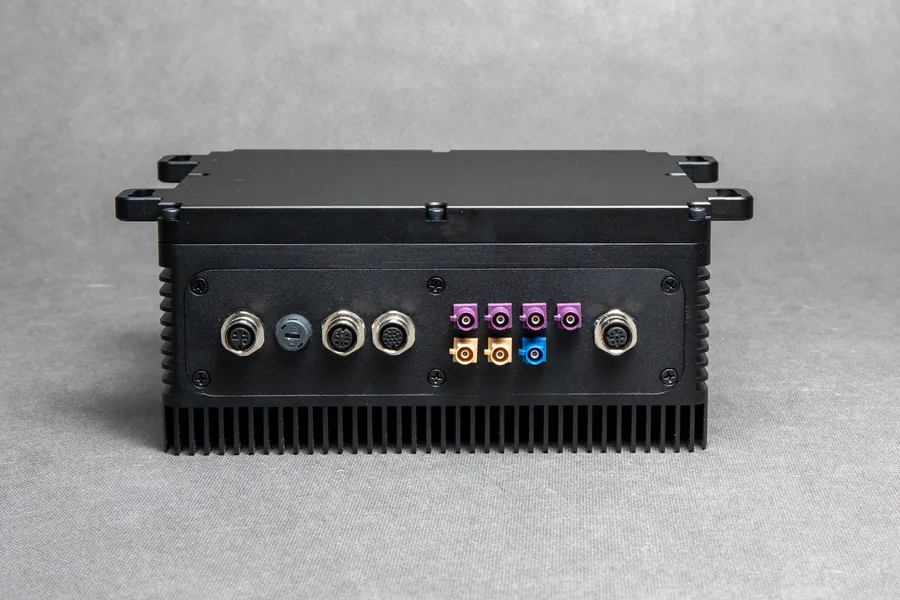
Bespoke builds for special, demanding projects
For a few genuinely punishing projects — salt spray, sustained vibration, shock and thermal extremes — we design and build the hardware ourselves, because nothing off the shelf survives it. These are MVP-stage, special-project builds, specified per project, not a certified catalogue product. Physical tamper-response options can be specified per project on these builds — scoped to your security requirements, not a catalogue option.
Sealed aluminium enclosure · designed for shock and vibration · tamper-evident · special projects only
Requirements and onboarding
- Requirements
- 64-bit x86-64 or a supported ARM board; UEFI boot (ARM boards boot through their vendor firmware); TPM 2.0; about 16 GB or more of eMMC or NVMe/SSD; 2 GB RAM or more; internet access at first boot.
- How it starts
- You tell us your CPU architecture and boot storage; we build and supply the image for that hardware; your devices are pre-registered with us; each device then provisions itself on first power-on.
Initial bring-up is a deliberate, human-gated project — updates after that are zero-touch.
07 / Alternatives
How we differ from the platforms you're also evaluating
The capable edge-Linux platforms are all good at this. We are not going to pretend otherwise, or claim security features every one of them has. Here is where the choice actually turns.
Scroll the table sideways to see every column
| HurricaneOS | Snap-based OS | Container-fleet platform | Module-vendor OS | |
|---|---|---|---|---|
| Immutable system volume | yes: Read-only by design | yes: Snap-based | yes: Read-only | yes: OSTree-based |
| Automatic rollback on a failed update | yes: Bootloader-level, no operator | no: Per-snap revert, not whole-image | yes: Host OS updates | yes: OSTree rollback |
| Runs on hardware you already ship | yes: x86-64 or supported ARM boards with TPM 2.0 — image built and certified per board | yes: Certified boards; enablement fee otherwise | yes: Supported device-type list | no: Built around the vendor's own modules |
| Who operates the fleet day to day | yes: We do — patching, rollouts, monitoring, response | no: You do, in your own store and tooling | no: You do, in their dashboard | no: You do, in their cloud |
| Vendor jurisdiction | yes: Poland — EU | no: Non-EU | no: Non-EU | no: Non-EU |
Compiled from each platform's published documentation as of October 2026. All are capable; every one does immutability properly — that is table stakes, not a differentiator; some can be cheaper per device at volume. The distinctions that survive scrutiny are hardware independence and where the vendor sits.
Get started
See HurricaneOS in action
Book a 30-minute demo, or ask about a trial on a board we certify or a leased unit. No commitment to talk.